
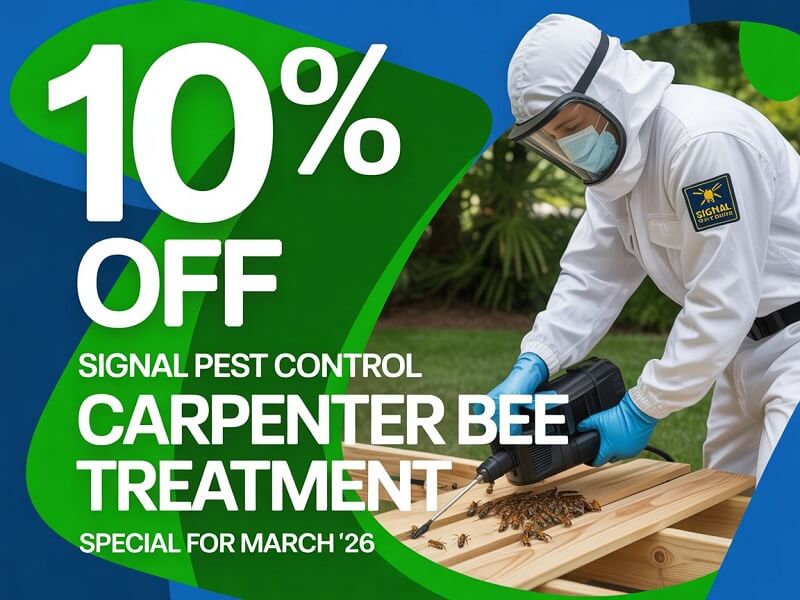
If you’re noticing unwanted visitors buzzing around your porch or patio, you may be dealing with carpenter bees. At Signal Pest Control, we provide expert carpenter bee treatment in Rossville, GA, ensuring your home remains safe and pest-free. Carpenter bees can cause significant damage to wood surfaces, so it’s crucial to act quickly.
Why Carpenter Bee Treatment matters in Rossville, GA
Carpenter bees are not just a nuisance; they can lead to damaging infestations that compromise the integrity of your home. Understanding the importance of professional treatment can save you time, money, and stress.
- Wood Damage: Carpenter bees tunnel into wood surfaces to create nests, weakening structures over time.
- Interior Issues: Damage can lead to infestations of other pests, requiring more extensive treatment.
- Protecting Aesthetics: Holes and stains can detract from the beauty of your home’s exterior.
Signs you may need Carpenter Bee Treatment
Awareness of the signs of carpenter bees is the first step in addressing the problem effectively. Watch for the following indicators:
- Visible holes in wood surfaces (typically ½ inch in diameter).
- Wood shavings or sawdust underneath these holes.
- Buzzing sounds near wooden structures, especially in spring.
- Presence of adult carpenter bees, often seen hovering around their nesting sites.
Our Carpenter Bee Treatment process
At Signal Pest Control, we follow a comprehensive treatment plan to ensure effective eradication of carpenter bees:
1. Initial Inspection
Our experts conduct a thorough examination of your property, identifying nest locations and assessing the extent of the infestation.
2. Treatment Application
We use targeted, eco-friendly treatments designed to eliminate existing bees and deter future infestations.
3. Preventative Measures
After treatment, we offer advice on preventative measures, such as:
- Sealing wood surfaces with paint or varnish.
- Regular inspections to catch reinfestations early.
- Choosing non-wood materials for exterior structures when possible.
What to expect (timeline / follow-up)
Understanding the timeline of treatment and follow-up care can help you prepare:
- Initial Visit: Typically takes about 30-60 minutes.
- Immediate Results: Most treatments show results within a few days.
- Follow-Up Check: We recommend a follow-up inspection within 30 days to ensure effectiveness.
Map of Rossville, GA
About Rossville, GA
Rossville sits just south of Chattanooga along the Tennessee border and is one of the most historic communities in Walker County. Many homes in Rossville feature crawl spaces, older foundations, and wooded surroundings that can create ideal conditions for seasonal pest activity. Because Rossville experiences warm summers and mild winters, homeowners often deal with common regional pests such as ants, spiders, termites, cockroaches, and mosquitoes throughout the year. Signal Pest Control provides preventative pest control services for Rossville homeowners to help stop infestations before they start. Local Interest: Nearby areas like Missionary Ridge, Chickamauga Battlefield, and Lookout Mountain provide beautiful natural surroundings but can also contribute to increased insect activity in nearby residential neighborhoods. Seasonal changes and moisture conditions around Rossville homes can attract pests looking for shelter, food, and water sources. Routine preventative pest control treatments can help protect homes throughout the year.
Local Service Notes for Rossville, GA
Even nearby neighborhoods can behave differently depending on shade, drainage, vegetation, and how structures are sealed. We tailor service in Rossville, GA based on what we find during inspection.
Every area has its own patterns of pest activity based on moisture, temperature shifts, and how homes and businesses are built. Our approach to Carpenter Bee Treatment in Rossville focuses on practical prevention, targeted treatment, and clear follow-up steps.
Home and property conditions that can increase pest pressure
- Moisture: leaks, damp crawl spaces, clogged gutters, and poor drainage
- Shelter and harborage: thick landscaping, wood piles, debris, and cluttered storage
- Entry routes: door sweeps, vents, utility penetrations, and small gaps along the foundation
Local tips for Carpenter Bee Treatment in Rossville
- Inspection-driven: The best results come from addressing food, water, shelter, and entry points.
- Exterior-first: Many issues start outside; perimeter treatments can reduce indoor pressure.
- Follow-up: A planned follow-up schedule helps prevent re-infestations as conditions change.
Quick prevention tips for homeowners
- Keep food sealed, wipe surfaces regularly, and reduce moisture sources
- Trim vegetation away from the exterior and keep mulch from touching siding
- Fix leaks promptly and keep crawl spaces/attics properly ventilated
- Keep trash sealed and move wood piles/debris away from the structure
FAQ
How long does a carpenter bee treatment last?
While treatments can last several weeks, it’s essential to take preventative measures to deter future infestations.
Are carpenter bees dangerous to humans?
Carpenter bees are not aggressive and usually avoid confrontation. However, they can sting if provoked.
What time of year are carpenter bees most active in Rossville, GA?
Carpenter bees typically emerge in the spring and are most active during warm weather.
Can I treat carpenter bees myself?
While DIY methods exist, professional treatment is often more effective due to the expertise and tools available.
What can I do to prevent carpenter bees?
Sealing any exposed wood surfaces and painting or staining wood can help deter carpenter bees from nesting.
How do I know if I have carpenter bees or bumblebees?
Carpenter bees have a smooth, shiny abdomen with few hairs, while bumblebees are fuzzy and have hairy bodies.
Call to Action
Don’t let carpenter bees compromise the safety and beauty of your home. Contact Signal Pest Control today at (423) 498-4840 for a professional carpenter bee treatment in Rossville, GA. Let us help you safeguard your property from these wood-destroying pests.